For many Nigerians, visiting the hospital is often a last resort. It usually happens when symptoms have become severe, discomfort is unbearable, or a condition has already progressed. This pattern is common across the country, driven by long waiting times, high out-of-pocket costs, and limited access to healthcare facilities.
But what if fewer hospital visits didn’t mean neglecting your health but actually improving it? That is the core idea behind preventive care.
Reducing hospital visits is not about avoiding care. It is about accessing the right care at the right time, before conditions escalate into emergencies.
Understanding Preventive Care
Preventive care focuses on maintaining your health and identifying risks early, rather than waiting to treat illness after it becomes serious.
It includes:
- Early consultations when symptoms appear
- Routine health checks (blood pressure, blood sugar)
- Ongoing monitoring of existing conditions
- Lifestyle adjustments based on medical advice
- Regular follow-ups with healthcare professionals
Instead of reacting to illness, preventive care helps you stay ahead of it.
Why Hospital Visits Are Often Avoidable
Many hospital visits are triggered by conditions that could have been managed earlier.
For example:
- A persistent headache could be an early sign of hypertension
- Fatigue might be linked to stress, nutrition, or underlying conditions
- Mild infections can worsen when left untreated
- Chronic conditions like diabetes become dangerous without regular monitoring
When these issues are addressed early, they rarely require emergency care or hospitalisation.
The Cost of Delaying Care
Delaying care often leads to:
- More severe health complications
- Higher treatment costs
- Longer recovery periods
- Increased stress for individuals and families
In Nigeria, where healthcare costs are largely paid out-of-pocket, waiting until a condition becomes serious can significantly increase financial burden.
Preventive care reduces both health risk and financial strain.
Practical Ways to Reduce Hospital Visits
1. Don’t Ignore Early Symptoms
The first step in preventive care is paying attention to your body.
If something feels unusual, persistent pain, discomfort, or fatigue, it is important to seek medical advice early.
Early consultation can prevent a minor issue from becoming a major one.
2. Make Regular Health Checks a Habit
Many conditions develop silently.
High blood pressure, diabetes, and other chronic illnesses often show few or no symptoms in early stages.
Regular checks help you:
- Detect issues early
- Monitor changes over time
- Take action before complications arise
3. Stay Consistent With Follow-Ups
Seeing a doctor once is not always enough.
Preventive care requires consistency.
Follow-up consultations help track progress, adjust treatment, and prevent relapse.
4. Adopt Healthier Daily Habits
Your lifestyle plays a major role in your health.
Simple habits can significantly reduce the risk of illness:
- Eating balanced meals
- Reducing salt and sugar intake
- Staying physically active
- Getting enough rest
- Managing stress
Preventive care is not only clinical; it is also behavioural.
5. Use Digital Healthcare for Early Access
One of the biggest barriers to preventive care in Nigeria is access.
Hospitals can be far, crowded, and time-consuming.
This is where digital healthcare becomes important.
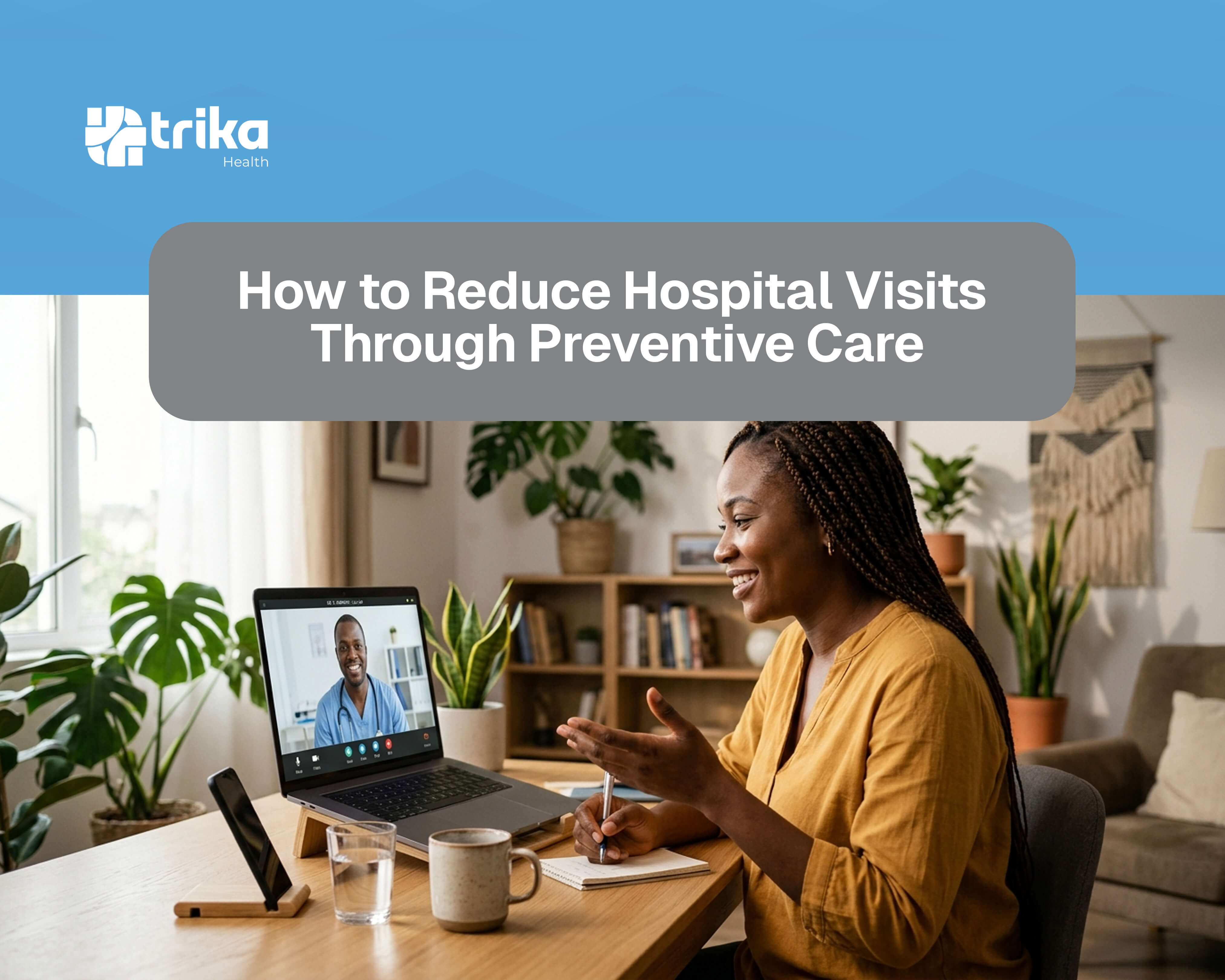
With platforms like TrikaHealth, you can:
- Speak to a doctor without travelling.
- Get medical advice quickly
- Follow up consistently
- Manage your health from anywhere
This removes the friction that often leads people to delay care.
How TrikaHealth Supports Preventive Care
TrikaHealth is designed to make preventive healthcare simple and accessible.
Instead of waiting until conditions worsen, users can:
- Consult licensed doctors early
- Receive guidance on symptoms and next steps
- Stay connected through follow-ups
- Manage ongoing health conditions effectively
By making healthcare more accessible, TrikaHealth helps reduce unnecessary hospital visits while improving overall health outcomes.
A Smarter Approach to Healthcare
Reducing hospital visits does not mean reducing care.
It means receiving care earlier, more consistently, and more efficiently.
Preventive care shifts healthcare from emergency response to proactive management. It saves time, reduces costs, and protects long-term health.
In a system where hospitals are often overwhelmed, preventive care also helps improve efficiency—allowing healthcare facilities to focus on patients who truly need urgent attention.
Conclusion
Healthcare should not begin when things go wrong. It should be part of everyday life.
By paying attention to early symptoms, maintaining healthy habits, and using accessible tools like TrikaHealth, individuals can take control of their health and avoid unnecessary hospital visits.
The goal is simple:
Stay ahead of illness, instead of reacting to it.
Take a proactive approach to your health today.
Visit www.trikahealthng.com or download the TrikaHealth app to get started.